
Project Description
“More Than a Concept: A Personal Vision for Community.”
The Dade County Community Recreation & Veterans Center represents a concept initially developed during my time at CPH Consultants, Inc. Although the project was ultimately not selected, the design process allowed me to explore a vision that I felt profoundly connected to—one that blended civic purpose, architectural presence, and community-centered programming in a meaningful way. Despite not having the opportunity to see the project through to completion, this design remains one of the most significant concepts I contributed to during that period, and it continues to hold a strong emotional resonance for me.
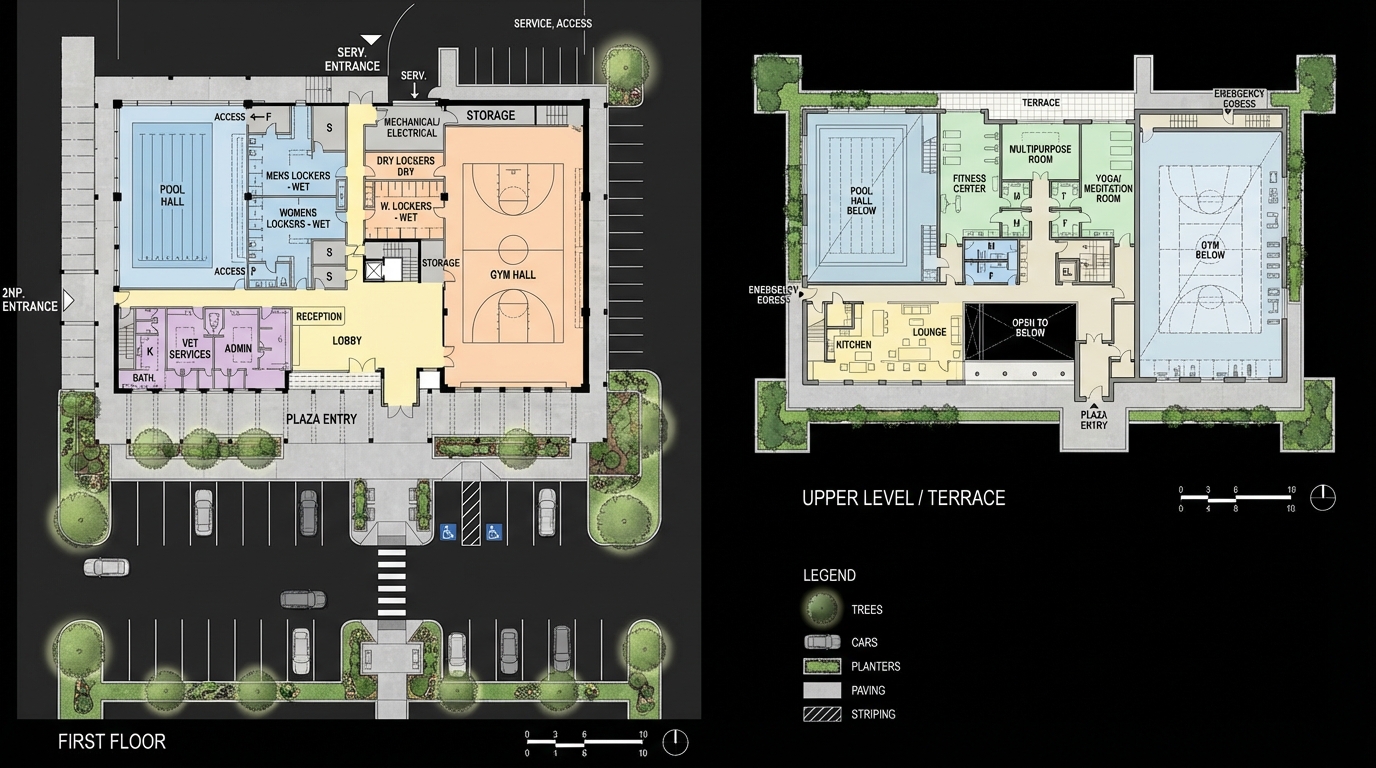
The architectural intent of the project was to establish a new civic destination for Dade County—an inviting, modern facility that brings together recreation, wellness, community services, and dedicated spaces honoring local veterans. The design emphasizes warmth, transparency, and human-centered programming. A refined palette of wood cladding, expanded glazing, structural fins, and metal detailing creates a visual rhythm and contemporary identity, while the wood-louver canopy, rooftop terrace, and landscaped entry promenade reinforce the building’s connection to the outdoors and its integration into the surrounding urban fabric.
Expansive curtainwall glazing opens the building to the community, allowing clear views into multipurpose spaces, athletic amenities, and activity zones. Large banners highlighting community engagement celebrate the diverse programs offered within and make the center instantly identifiable as a hub of gathering and activity. Thoughtful nighttime illumination underscores the project’s civic presence, transforming the façade into a warm, active landmark after sunset.
Material and cladding studies were carefully developed to balance aesthetics, durability, and cost effectiveness, while lighting diagrams and massing refinements were crafted to ensure both functional clarity and architectural impact. Although the project did not move forward, the design embodies principles that remain central to my architectural approach: community-focused programming, strong urban presence, a commitment to comfort and visibility, and the belief that civic buildings should uplift the people they serve.
Presenting this unbuilt concept is an opportunity to share the strength of the original vision—a vision I still believe could bring lasting value, beauty, and identity to a community. I hope that by giving this project visibility, it may continue to inspire future work and serve as a reminder that powerful design ideas can endure, even when they are not selected. Ultimately, this concept reflects my dedication to crafting architecture that enhances public life, honors local identity, and creates destinations that matter.